Most people who walk into an indoor cycling class for the first time have one goal in mind: losing weight. It is an understandable starting point, and spin classes do deliver on that front. But if calorie burn is the only reason you are clipping into those pedals, you are missing the bigger picture entirely. The benefits of consistent indoor cycling stretch well beyond the scale, touching your heart, your joints, your mental state, and your long-term physical resilience in ways that most gym-goers never fully appreciate.
If you have been searching for a spin studio Singapore that offers more than just a sweaty hour on a bike, understanding what the science actually says about indoor cycling will change how you approach every session.
What Indoor Cycling Does to Your Heart
The cardiovascular system is where indoor cycling earns its strongest scientific backing. When you ride consistently at moderate to high intensity, several measurable changes occur in how your heart functions. Your resting heart rate drops over time, which is a direct marker of improved cardiac efficiency. Your heart pumps more blood per beat, meaning it does not have to work as hard during everyday activities. Your VO2 max, which is your body’s ability to use oxygen during intense exercise, increases with regular training.
These are not minor cosmetic changes. A lower resting heart rate and higher VO2 max are two of the strongest predictors of long-term cardiovascular health and overall longevity. Studies consistently show that people who engage in regular vigorous aerobic activity have significantly lower rates of heart disease, stroke, and hypertension compared to sedentary individuals.
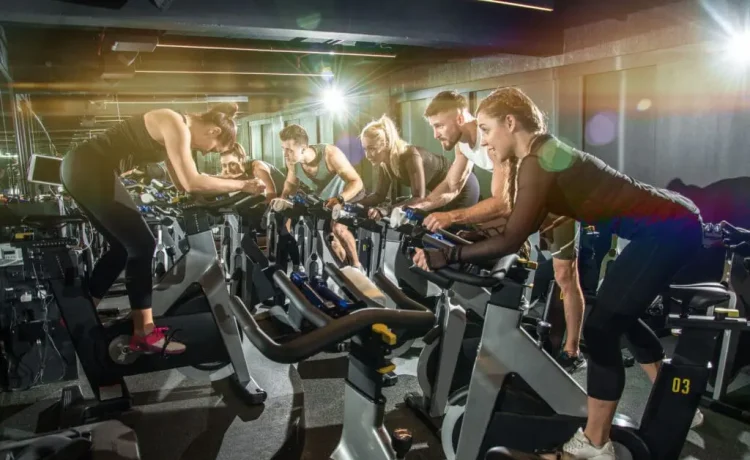
In a class format like RPM, which is one of the signature spin formats available at TFX, riders are taken through structured intervals of hill climbs, sprints, and flat rides. This variation in intensity is key. It trains different energy systems simultaneously, pushing your cardiovascular system to adapt across a range of demands rather than simply maintaining a steady moderate effort on a treadmill.
Building Real Muscular Strength on the Bike
There is a persistent myth that indoor cycling only develops cardiovascular fitness and leaves you with skinny legs. The reality is more nuanced. Spin classes, particularly those that incorporate hill climbs and high-resistance intervals, place significant demand on the lower body musculature.
During a seated climb, your quadriceps, hamstrings, glutes, and calves all engage heavily to push through each pedal stroke. When you rise out of the saddle for a standing climb or sprint, the demand shifts and increases, recruiting stabilising muscles in your core, hips, and lower back as well. Over weeks of consistent riding, this translates into genuine muscular development and endurance in the lower body.
Classes like ICE Bootcamp take this further by layering power cycling with core training and conditioning work within the same 60-minute session. This is not simply cardio with a cycling backdrop. It is a structured full-body conditioning workout that builds functional strength alongside cardiovascular fitness.
The Difference Between Muscle Endurance and Muscle Bulk
Many riders, particularly women, worry that spin classes will cause their legs to become overly muscular or bulky. This concern is largely unfounded. Indoor cycling develops slow-twitch muscle fibres, which are responsible for endurance and sustained effort rather than maximum force production. Building significant muscle bulk requires progressive overload with heavy resistance training and a caloric surplus, neither of which applies to the format of a spin class. What you develop instead is leaner, more defined lower body musculature with improved endurance capacity.
The Joint Health Argument for Spin in Singapore
Singapore is a city of walkers, runners, and commuters. Pavements are hard, distances are walked daily, and many fitness enthusiasts log significant running mileage on unforgiving urban surfaces. The cumulative impact on knees, hips, and ankles over years of this kind of loading is real.
Indoor cycling is a low-impact activity, which means there is no ground reaction force travelling up through your joints with every pedal stroke. The movement is smooth, circular, and controlled. For anyone managing mild knee discomfort, recovering from a lower limb injury, or simply looking to preserve joint health as they age, spin offers a way to maintain high cardiovascular output without the wear that comes from impact-based exercise.
This is particularly relevant for Singaporeans in their mid-thirties and beyond who are still active but starting to notice that running or jumping workouts leave them sore in ways that take longer to resolve than they used to.
Mental Health Benefits That Ride Beneath the Surface
The mental health benefits of regular intense exercise are well documented, but they are worth addressing specifically in the context of indoor cycling because the format amplifies them in particular ways.
When you push through a hard sprint in a spin class, your brain releases a cascade of neurochemicals including endorphins, dopamine, and serotonin. These are the same chemicals associated with mood elevation, motivation, and stress relief. The effect is dose-dependent, meaning the harder the effort, the stronger the neurochemical response. This is why riders consistently describe feeling noticeably better after an intense spin session than they did walking in.
The group dynamic adds another layer. Research on synchronised movement, which is when people move together in rhythm, shows that it produces a social bonding effect and a measurable increase in pain tolerance and positive mood. A spin class, where an entire room rides to the same beat under the guidance of an instructor, is essentially a structured synchrony exercise. The group energy is not just motivational theatre. It is physiologically meaningful.
For Singaporeans navigating high-pressure work environments, tight deadlines, and dense urban living, this combination of neurochemical release and group synchrony creates a powerful and accessible mental reset that is difficult to replicate with solo gym training.
How Twelve Weeks of Spin Changes Your Body
Weeks one and two are typically about adaptation. Your body is learning the mechanics of the bike, finding a comfortable seat position, and getting accustomed to the sustained effort. Most new riders experience muscle soreness, elevated heart rate during class, and significant fatigue afterwards.
By weeks three and four, recovery begins to improve noticeably. You start finding that you can push a little harder on the resistance dial and recover faster between intervals. Your resting heart rate may already be trending slightly lower.
Between weeks five and eight, cardiovascular adaptations become more pronounced. You begin handling sprint intervals that previously felt unmanageable. Your lower body strength is visibly improving, and you notice that everyday activities, climbing stairs, walking longer distances, feel noticeably easier.
By weeks nine through twelve, you are a meaningfully different athlete from where you started. Your endurance base is stronger, your heart is more efficient, your lower body is stronger and more defined, and your mental relationship with hard physical effort has shifted. Many riders at this point start exploring higher-intensity formats like MeteoRIDE or Extreme Ride, which are designed for experienced cyclists ready to push their performance ceiling further.
Why the Calorie Number Is Only One Piece of the Picture
A single RPM session at TFX can burn up to 675 calories. That is a meaningful number and it matters for people with fat loss goals. But framing spin classes purely through the lens of calories burned misses the compounding value of everything else that comes with consistent training.
Improved cardiovascular health reduces your long-term risk of chronic disease. Stronger muscles improve your metabolic rate, meaning your body burns more calories at rest. Better sleep, which regular intense exercise promotes, improves hormone regulation and reduces emotional eating patterns. A more resilient mental state makes it easier to maintain healthy habits across every other area of your life.
TFX Singapore offers a range of spin formats that allow you to build from foundational cycling technique all the way through to high-performance interval training, giving you a progressive structure that supports long-term health rather than short-term results alone.
FAQ
Q: How many spin classes per week should I do to see real health results?
A: For measurable cardiovascular improvement, most exercise physiologists recommend at least three sessions per week at moderate to high intensity. Two sessions per week will maintain a baseline, while four or more sessions, combined with adequate recovery, will produce faster and more pronounced results. The key is consistency over weeks and months rather than cramming sessions into a short burst.
Q: Is indoor cycling safe if I have mild knee pain?
A: In most cases, yes. Because indoor cycling is non-impact, it places far less stress on the knee joint than running, jumping, or stair-based exercises. However, proper bike setup is critical. Incorrect saddle height is the most common cause of knee discomfort during cycling. If your seat is too low, it increases compression on the kneecap. If it is too high, it strains the back of the knee. An instructor can assist with correct setup before your first class.
Q: Can spin classes improve my sleep quality?
A: Regular vigorous exercise has a well-established positive effect on sleep quality, including faster sleep onset, longer deep sleep phases, and improved sleep efficiency. The timing of your spin class matters. Morning or early afternoon sessions tend to have a more neutral effect on sleep, while very late evening high-intensity sessions may elevate cortisol and heart rate in ways that delay sleep onset for some individuals.
Q: What should I eat before a spin class in Singapore’s heat?
A: Aim for a carbohydrate-rich, moderate-protein, low-fat meal roughly 90 minutes before class. In Singapore’s heat and humidity, prioritise hydration before class as well, drinking at least 500ml of water in the two hours leading up to your session. Avoid heavy, oily, or high-fibre meals immediately before class as these slow digestion and can cause discomfort during intense pedalling.
Q: Does indoor cycling help with high blood pressure?
A: Yes. Regular aerobic exercise is one of the most effective non-pharmacological interventions for reducing blood pressure. Studies show that consistent moderate to vigorous aerobic activity can reduce systolic blood pressure by an average of 5 to 8 mmHg in people with hypertension. Indoor cycling, done consistently three or more times per week, contributes meaningfully to this effect. Always consult your doctor before starting an intense exercise programme if you have been diagnosed with hypertension.