There is a reason competitive athletes train with teammates, marathon runners perform better in large races than in time trials, and gym-goers who join classes tend to outlift, outrun, and out-endure their solo counterparts. It is not simply motivation or atmosphere. There are deeply rooted psychological and neurological mechanisms at work that make exercising in a group fundamentally different from exercising alone, and the science behind it is fascinating.
If you have ever signed up for fitness classes singapore and found yourself pushing through that last set of squats or cycling harder than you thought you could, this article explains exactly why that happens.
The Köhler Effect: Nobody Wants to Be the Weakest Link
First documented by Otto Köhler in the 1920s, the Köhler Effect describes how individuals work harder when part of a group than when working alone, particularly when they are the less capable member of the group. The effect is driven by a reluctance to be seen as the weakest contributor, which motivates individuals to increase their effort.
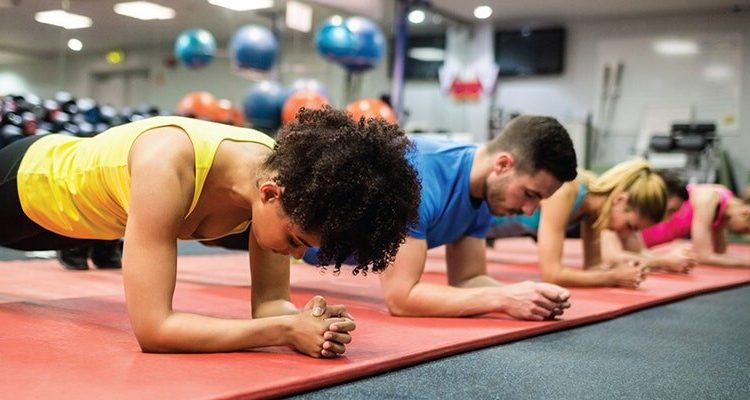
In a fitness context, this translates directly to class environments. When you are cycling next to someone who is maintaining a higher resistance level, or holding a plank while others around you are still going, something in your psychology kicks in and pushes you to hold on a little longer than you would have on your own.
Importantly, research shows that the Köhler Effect is most pronounced when the performance gap between participants is moderate rather than extreme. If everyone in the room is significantly fitter than you, the effect can reverse and become discouraging. This is why well-designed fitness classes group participants appropriately and why instructors work to ensure no one feels hopelessly out of their depth.
Social Facilitation: The Presence of Others Changes How You Perform
Social facilitation is one of the oldest findings in social psychology, first observed by Norman Triplett in 1898 when he noticed that cyclists rode faster in the presence of others than alone. Later research by Robert Zajonc formalised the theory: the presence of an audience or co-actors increases arousal, which enhances performance on tasks that are already well-learned and reduces performance on tasks that are new or complex.
In group fitness, this works in your favour once you have learned the movements. Once you are familiar with the exercises in a class, the presence of others naturally elevates your performance. Your body produces more adrenaline, your heart rate increases slightly even before you begin, and you are primed to work harder.
This is part of why people who have been attending the same class format for a few weeks often describe a noticeable improvement in their performance compared to when they first started, even setting aside the physiological adaptations from training.
Mirror Neurons and Movement Synchrony
Mirror neurons are a class of brain cells that fire both when you perform an action and when you observe someone else performing the same action. They are the neurological basis of imitation, empathy, and much of human learning. In a group fitness setting, mirror neurons are working overtime.
When you watch an instructor or fellow participant performing a movement with full effort and commitment, your brain activates the same motor pathways as if you were doing it yourself. This primes your body to replicate not just the movement pattern but also the intensity. High-effort movements performed by others around you effectively raise your internal baseline of what feels like appropriate effort.
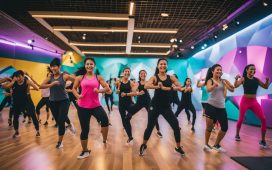
This is also why synchronised movement in classes, where everyone is performing the same exercise at the same time, tends to produce a feeling of collective energy or momentum. Research in movement synchrony shows that people who move in synchrony with others report higher pain tolerance, greater feelings of social bonding, and improved cooperation. In practical terms, this means a well-coordinated class can take you through levels of discomfort that you would not tolerate alone.
The Role of Music and Rhythm in Group Performance
Music is not merely background noise in a Workout classes. It is a scientifically validated performance-enhancing tool. Research by Dr Costas Karageorghis, one of the leading authorities on music and exercise, has shown that synchronising movement to music can reduce perceived effort by up to 10 percent and increase endurance performance by up to 15 percent.
In a group class, music serves multiple functions simultaneously. It sets the tempo, which synchronises the group’s movements. It reduces the perception of fatigue by directing attention away from physical discomfort. It triggers emotional responses that increase motivation. And it creates a shared sensory experience that enhances group cohesion.
The instructor’s role in selecting and timing music is therefore far more important than it might appear. A well-curated playlist that builds in intensity, peaks at the hardest section of the workout, and then eases during cool-down is a carefully designed psychological and physiological tool.
Accountability and the Commitment Effect
When you book a class, something psychologically meaningful happens. You have made a commitment. And humans are, by nature, deeply motivated to act consistently with their prior commitments. This is what Robert Cialdini calls the commitment and consistency principle in his work on influence and persuasion.
The commitment effect is amplified in group settings because it is social. You are not just letting yourself down if you skip a class you booked; you are also breaking a social commitment to the group, the instructor who knows your name, and the routine you have established. This social layer of accountability is one of the most powerful drivers of long-term exercise consistency.
In Singapore specifically, where social face and group harmony are culturally significant, this social accountability can be particularly effective. The reluctance to be seen as someone who does not follow through on commitments adds another motivational layer that solo gym sessions simply do not offer.
Emotional Contagion: Catching Energy From the Room
Emotions are contagious. When people around you are energised, smiling, and working hard, you tend to absorb and mirror those emotional states. This phenomenon, known as emotional contagion, is well-documented in social psychology and has direct implications for group exercise.
In a class where the energy is high and participants are genuinely engaged, you are far more likely to bring your best effort than in a quiet gym where everyone is plugged into their headphones and working in isolation. The collective emotional environment of a well-run fitness class essentially raises the floor of your own motivation and energy.
This is why experienced group fitness instructors invest so much in their personal energy and delivery. Their enthusiasm, tone of voice, and body language directly affect the emotional state of every participant in the room.
Long-Term Effects: What Happens to Your Brain When You Train in Groups
Beyond the immediate performance effects, regular participation in group exercise appears to have lasting neurological and psychological benefits. A 2017 study published in The Journal of the American Osteopathic Association found that people who exercised in groups reported significantly lower stress levels and higher quality of life compared to those who exercised alone, even when total exercise volume was the same.
The researchers attributed this to the combined effect of physical exercise, social interaction, and shared achievement. Group exercise appears to amplify the mood-boosting, stress-reducing effects of physical activity through the additional psychological benefits of community and connection.
At True Fitness Singapore, the class environment is structured to foster exactly this kind of experience, where physical and psychological wellbeing are developed together rather than in isolation.
FAQ
Q: Does the group effect work even if I do not know anyone in the class?
A: Yes. Research shows that the performance-enhancing effects of group exercise occur even among strangers. The physical presence of others exercising around you is enough to trigger social facilitation and the Köhler Effect, regardless of whether you have a personal relationship with them.
Q: Can being in a group ever hurt my performance?
A: In some cases, yes. If the group is significantly more advanced than you are and there is no instructor offering modifications, the gap can feel discouraging rather than motivating. This is why choosing a class appropriate to your current fitness level is important, particularly when you are starting out.
Q: Why do I feel more tired after a group class than after exercising alone, even when I think I worked at the same intensity?
A: You almost certainly worked harder than you realised. The social facilitation and Köhler Effects often cause people to exceed their usual output without fully registering the effort during the class. The music, group energy, and instructor cues all distract from perceived exertion, which is one of the reasons classes produce results so efficiently.
Q: Is there a psychological benefit to doing the same class repeatedly with the same group of people?
A: Absolutely. Repeated shared experiences with the same group builds social bonds, increases the commitment effect, and amplifies emotional contagion because you become more attuned to the emotional states of familiar people. Regular class communities often become a significant source of social support beyond just exercise.
Q: How do instructors keep the group dynamic positive when fitness levels vary so much between participants?
A: Skilled instructors manage this through inclusive language, offering exercise modifications for different levels simultaneously, celebrating effort rather than performance, and creating an atmosphere where personal improvement is the benchmark rather than comparison with others.